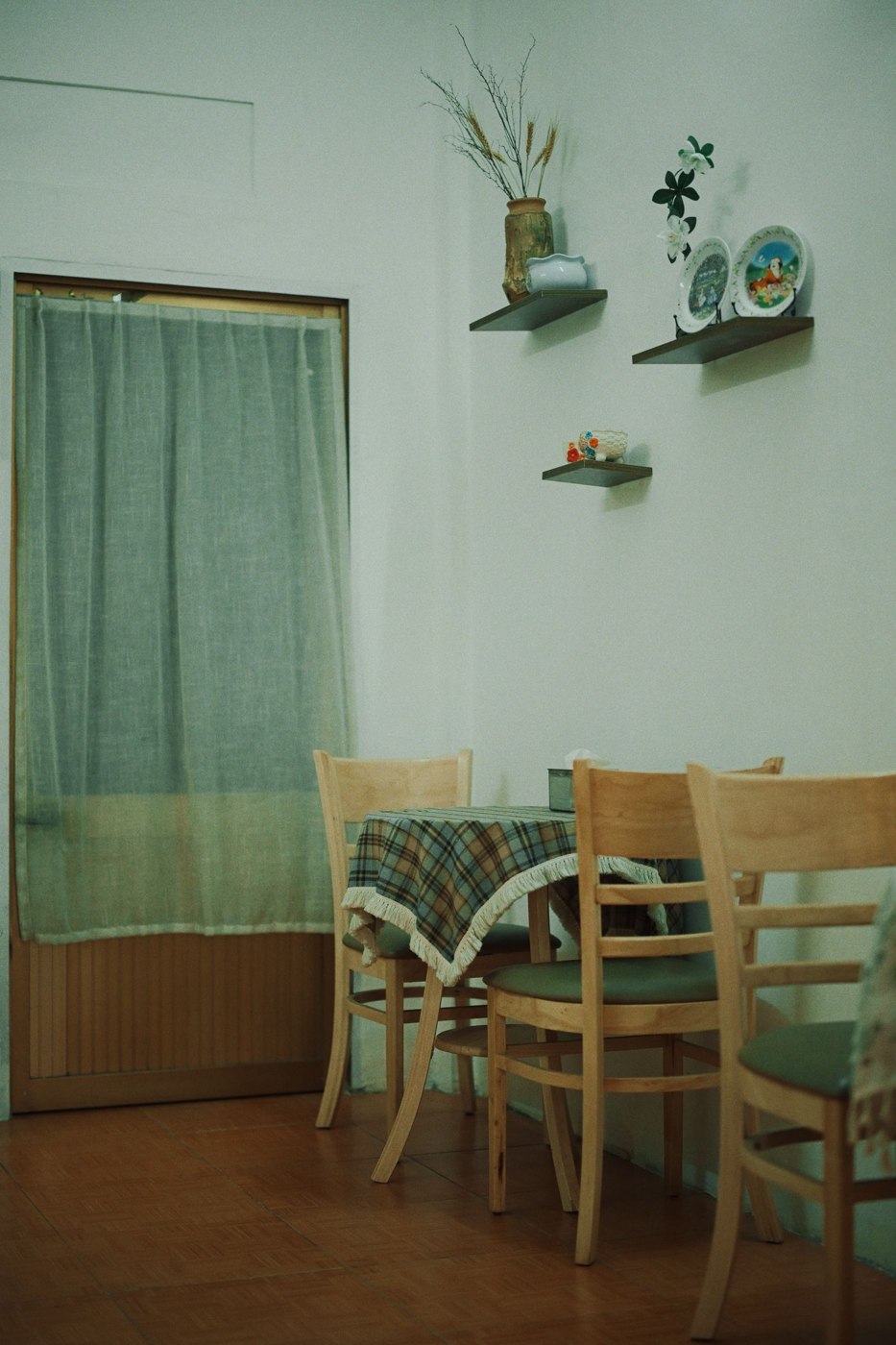
A small dining area can work well without accommodating every possible gathering. Its first job is to support ordinary meals for the people who use it daily. Choosing a table or rearranging chairs becomes easier when the space is measured with people sitting down, not only with the chairs pushed in.
Test the occupied footprint
Pull out each chair and imagine someone seated there while another person passes. Check the nearby door, refrigerator, or cabinet in its open position. A table that fits against the wall may still make the room awkward if every meal blocks access to something essential.
Consider the shape of the available space before choosing the table shape. A round table removes corners but can still occupy a substantial footprint. A narrow rectangular table may fit along a wall, although wall-side seating can be harder to enter. Try a scaled sketch or a temporary arrangement before purchasing.
Choose everyday capacity
Plan the regular seats first. An extending table is useful only if there is somewhere for its extended form and somewhere to store any extra chairs. Check the mechanism and weight as well as the maximum dimensions. If expanding it means moving half the room, it may be better reserved for occasional use.
A bench can tuck away neatly, but its suitability depends on the people using it. Getting in and out, back support, and reaching the table matter more than squeezing in the maximum number of bodies. Do not make a permanently uncomfortable seat the price of a smaller footprint.
Give meal items a short route
Store regularly used placemats, napkins, or serving utensils nearby if existing storage allows. Keep the table itself available rather than covering it with a permanent display that must be moved twice a day. One small decoration can be enough when the surface also holds breakfast or homework.
If the table doubles as a work area, use a tray or box for the materials that need to leave at mealtime. Assign that container a real storage place. Moving paperwork from the table to a chair only transfers the obstruction and makes the next change of activity harder.
Make clearing part of the design
Check whether crumbs can be removed and chairs moved without a struggle. A washable surface or finish compatible with the household’s cleaning habits may matter more than a particular style. Leave enough space to use the area comfortably every day, and borrow extra seating for the occasional larger meal if that suits the home better.