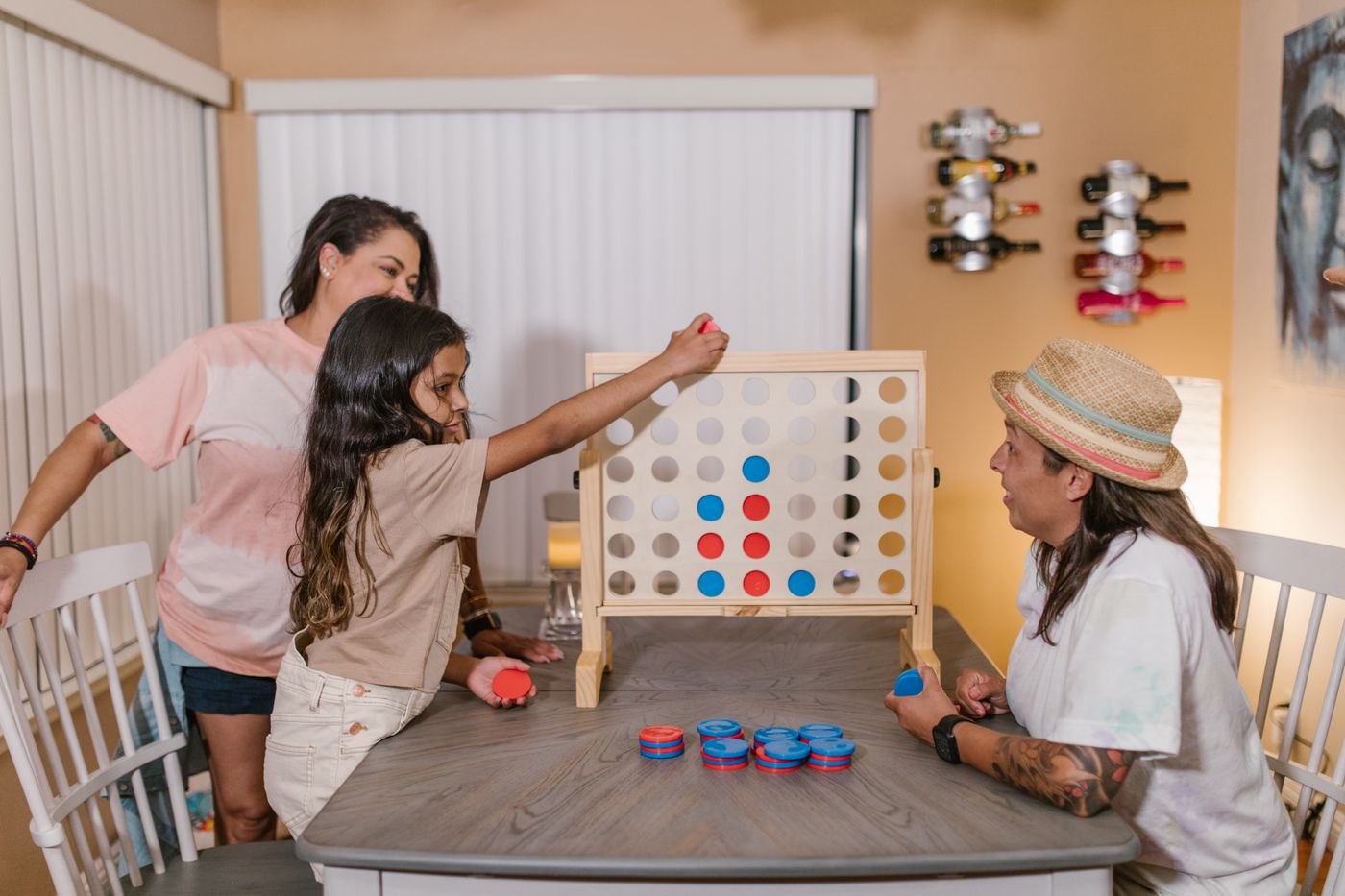
A hobby can spread through a shared room one small object at a time. A project on the table gains a tool beside the sofa, a supply bag near the door and an unfinished piece on a chair. Before buying another storage unit, define where the activity begins and where it needs to stop. The arrangement should make both doing the hobby and living around it possible.
Agree on the surface and the time
Name the surface the hobby will use and when that surface serves another purpose. A dining table might become a sewing area after dinner but need to be cleared before breakfast. A weekend project could remain longer if everyone agrees and there is another usable eating space.
Do not treat silence as agreement. Ask what access others need and which objects are regularly displaced. A project that occupies a room for several days should be discussed differently from a sketchbook open for an hour. The important measure is the effect on shared use, not only the physical size of the materials.
Design the pause before beginning
Choose a tray, box or suitable work surface that can hold the current stage when the activity stops. Keep it small enough to move safely and give it a destination. A portable project that has nowhere to go still ends up living on the table.
For work that must remain undisturbed, explain why and agree on a temporary location. Follow safety and ventilation instructions for materials and equipment. Sharp tools, small parts, hot equipment and chemicals need appropriate secure storage; a decorative basket within reach of a child is not automatically suitable.
Separate active supplies from the collection
Keep the tools for the current activity nearby and store less-used materials elsewhere. This reduces the area required to begin. It also helps show whether the activity itself needs more room or whether unused supplies are occupying the space intended for making things.
When adding supplies, consider where they will fit before buying them. A shared-room agreement can gradually fail if the original boundary stays the same while the collection grows. Review the arrangement when a hobby changes, rather than expecting everyone to adapt to a larger setup without discussion.
Make clearing away a manageable step
Leave a few minutes for closing the project, especially before a shared meal or bedtime. A clear container for the current work and a consistent home for tools can make this less disruptive. The hobby should not require a perfect display before it can pause.
If setup and cleanup are consistently too demanding, reduce the equipment used in each session or choose a different time or location. Protecting space for a hobby and respecting the room's other uses are both legitimate needs. A workable arrangement makes those needs visible instead of leaving them to compete through piles of belongings.