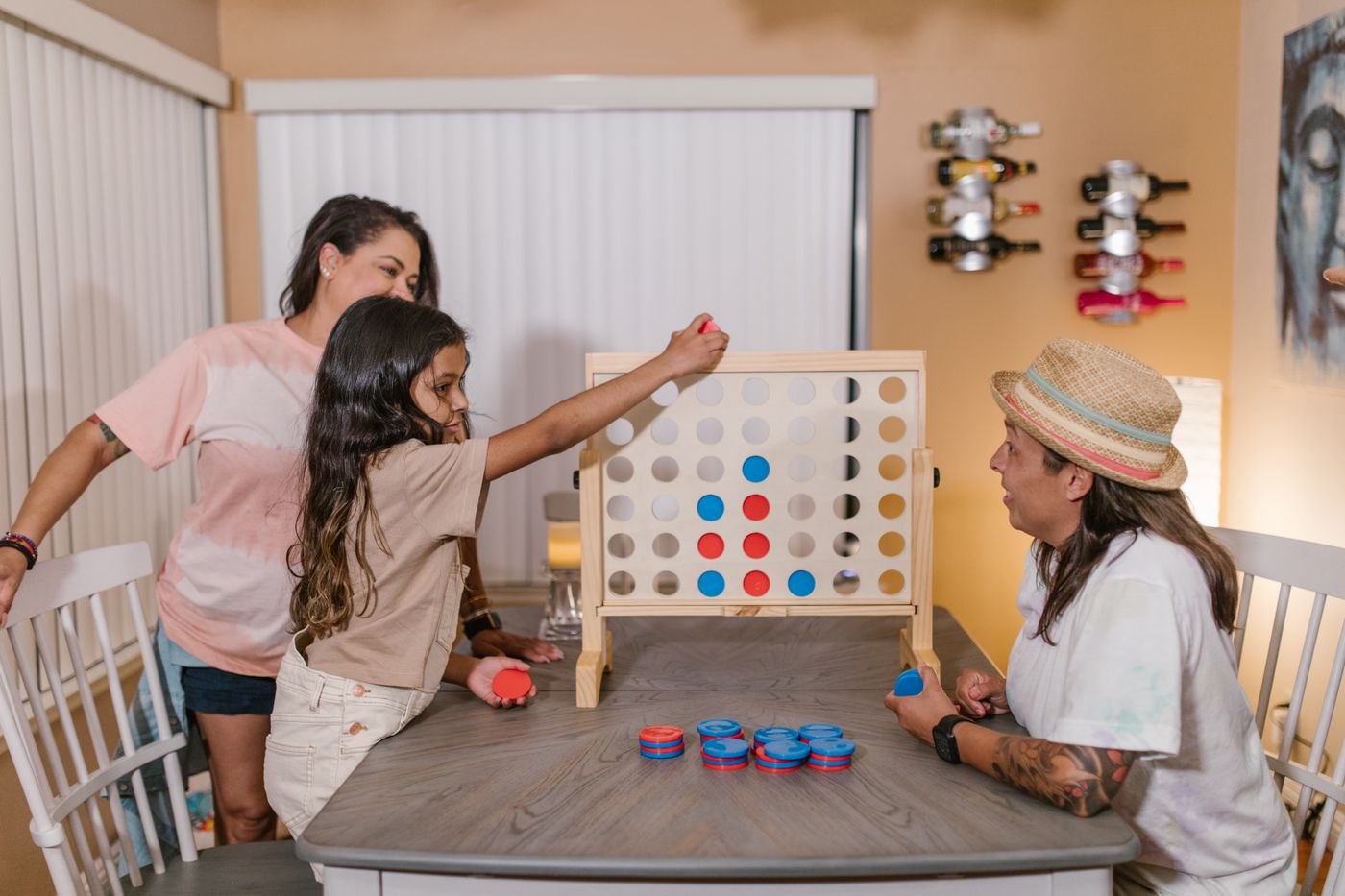
The best game for an evening is not always the most interesting game on the shelf. It is the one that fits the people present, the time available and the kind of interaction they want. A familiar short game can be welcoming when someone is tired or new to the group. A longer game works better when everyone knowingly chooses that commitment.
Ask about the evening before choosing the box
Check how much time people want to spend and whether they prefer cooperation, competition, words, strategy or something lighter. Someone may enjoy games but dislike being put on the spot. Offer a small choice rather than making one person's extensive collection into a presentation everyone must sit through.
Look at practical access as well as interests. Small print, hard-to-distinguish colors or pieces that are difficult to handle can affect participation. Ask what would help without making assumptions about a person. Good lighting, extra table space or a different game may solve a difficulty more comfortably than repeatedly assisting during play.
Teach enough to begin
Set out the board and show what a turn looks like. Explain the aim and the choices a player makes, then cover important exceptions when they become relevant. For a complex game, make clear that the first round can be a learning round. Avoid presenting a long rule summary while the pieces remain hidden in the box.
Invite questions without treating them as interruptions. If experienced players disagree about a rule, check the instructions together and choose a consistent interpretation before continuing. A newcomer should not be expected to infer an established group's unofficial habits.
Keep the pace considerate
Allow enough thinking time for unfamiliar decisions while noticing if the game is becoming slow for everyone. A gentle explanation of available options can help, but do not take over another player's turn. Learning through a choice is different from being told the supposedly optimal move every time.
Agree whether advice during play is welcome. Some people enjoy discussing possibilities; others want to make their own decisions. In a cooperative game, be especially careful that one confident player does not become the director while everyone else moves pieces on command.
End while the evening still feels shared
Name a stopping point before starting a long game. If the group is ready to stop sooner, choose a fair way to conclude rather than insisting that finishing the box's rules matters more than the people. Someone can also watch or sit out without needing to justify it.
Put pieces away together and check that small components are stored safely, especially where young children or pets may reach them. Ask which part of the evening people enjoyed. That answer can guide the next choice more usefully than who won.