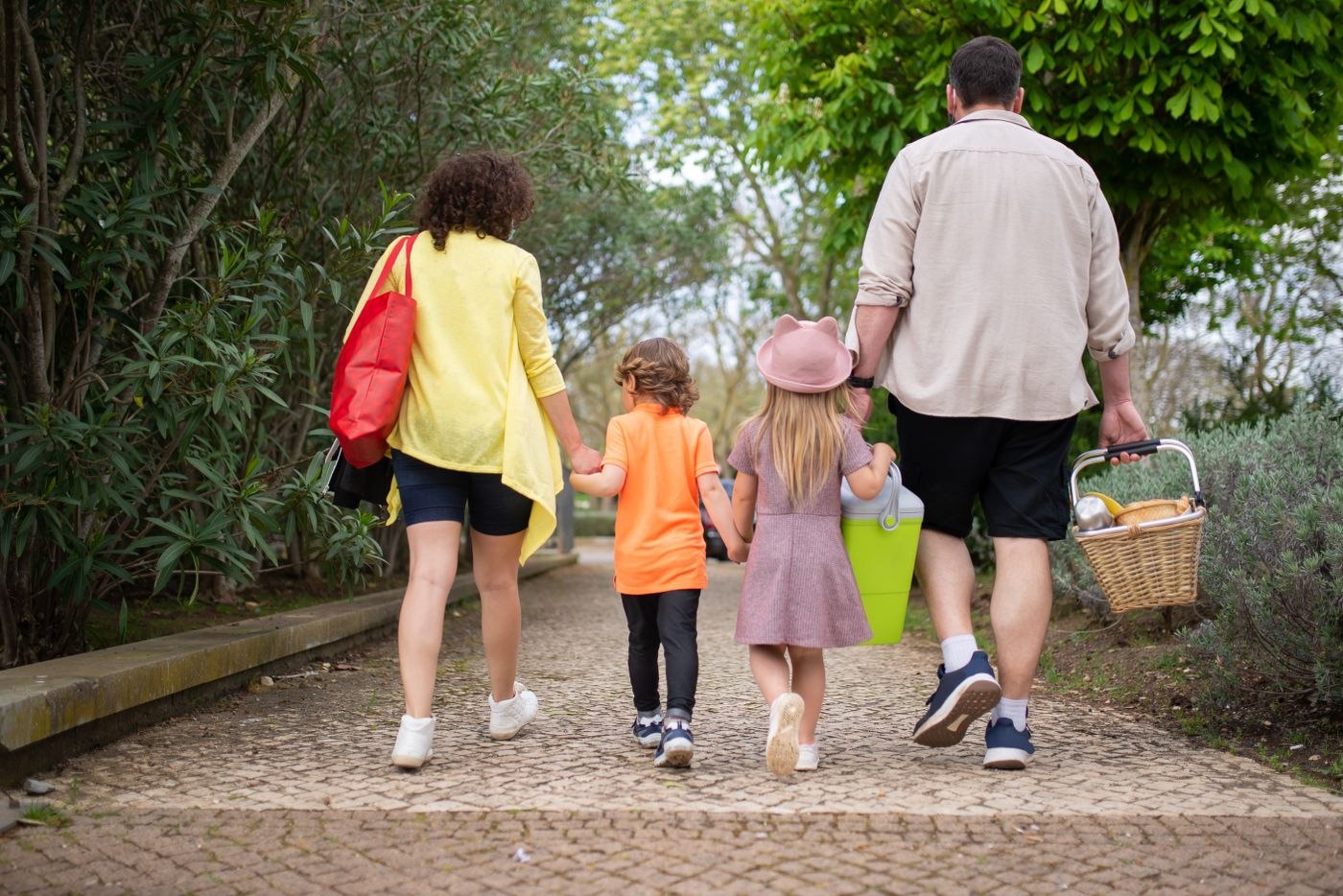
A walk does not need a distant destination or a full day of preparation. A familiar route near home may provide enough change of scene. Before leaving, consider who is coming, what the weather is doing, and how long the group wants to be out. Match the plan to those conditions rather than selecting a route first and expecting everyone to adapt.
Choose the route for today's group
Consider surface, slopes, crossings, seating, toilets, and any accessibility needs. Verify current conditions for unfamiliar routes through the responsible local authority or site operator. A path that appears short on a map may still be unsuitable for a stroller, mobility aid, or someone who needs frequent rests.
Use a loop only if the full distance is comfortable for everyone. An out-and-back route allows a clear turnaround when time or energy changes. Agree on that flexibility before leaving so turning back does not feel like a failed outing.
Take what the conditions require
Wear suitable clothing and footwear, and bring the essentials appropriate to the weather, duration, and personal needs. Follow local weather and safety guidance. A short neighborhood walk requires a different plan from a remote trail; do not treat the two as interchangeable because both involve walking.
Keep children's supervision and road crossings explicit. If a dog joins, follow local rules and consider how it affects pace and other walkers. Avoid adding equipment or activities merely because they might be useful. Too many optional items can turn a simple walk into a packing exercise.
Let the pace be shared
Allow time to notice things, talk, or walk quietly. The group does not need a step target or a destination purchase to justify going out. If different paces create frustration, choose a shorter route, planned meeting point, or another arrangement that keeps everyone appropriately safe and supervised.
Return while the experience is still manageable. Put shoes and wet clothing in their usual places, then leave the rest of the day open. If the route worked well, remember its useful features rather than trying to make the next walk longer or more elaborate automatically.