Indoor drying uses more than the floor space occupied by a rack. Clothes need room around them, people need a clear route through the room, and the moisture released during drying has to be managed. Choose the location and the load size together rather than filling every available rail at once.
Start with the garment and the room
Check care labels for whether items should hang, lie flat, or use another drying method. A heavy wet garment may stretch if hung inappropriately. Use a rack or support suited to the item and follow its load limits.
Choose a stable location away from doors, stairs, and ordinary walking routes. Keep fabric away from heaters and other heat sources unless the equipment is specifically designed for that use and its instructions permit it. Do not drape laundry over appliances or obstruct vents.
Allow space between items
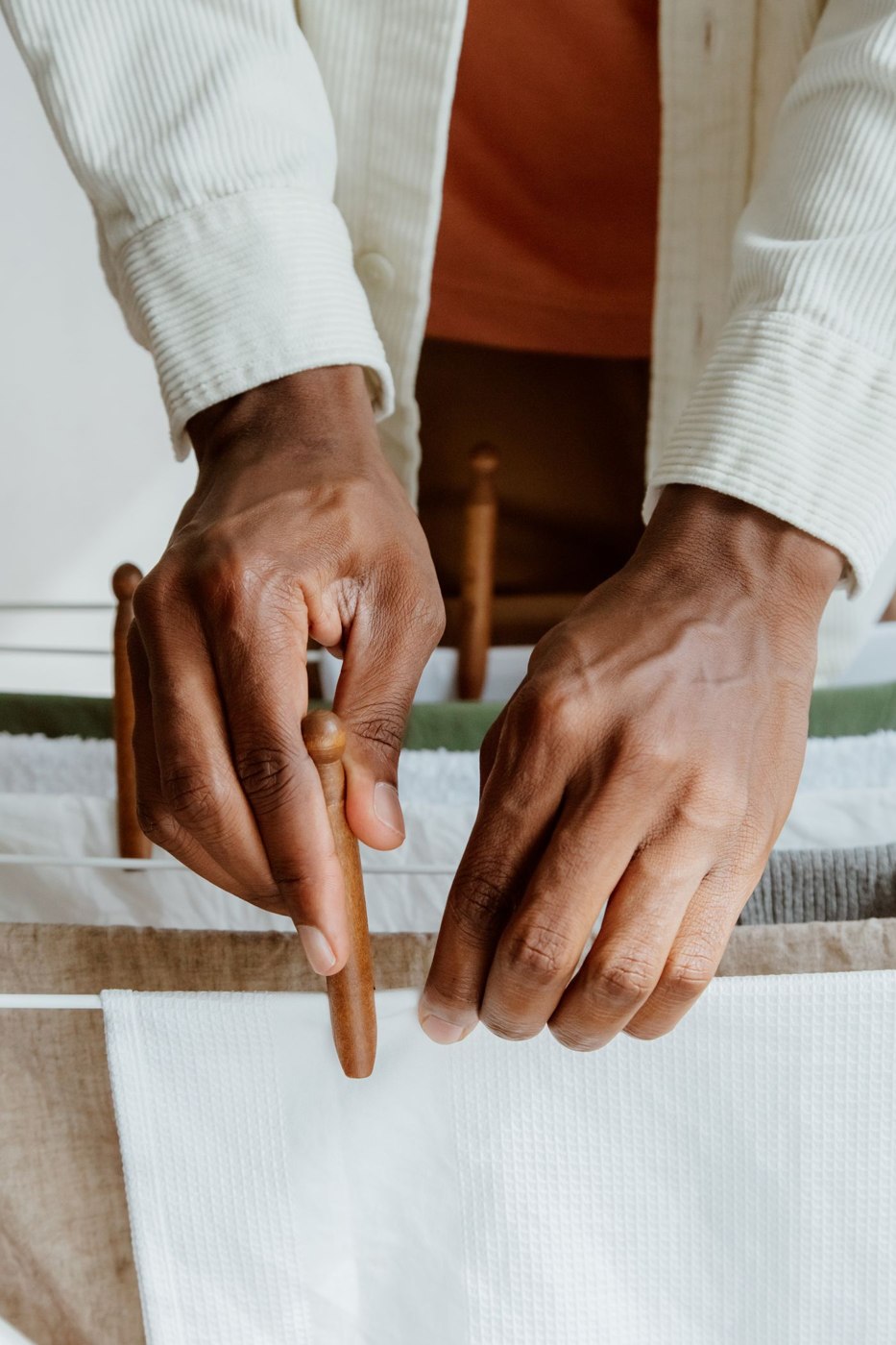
Arrange clothes so they are not densely layered against each other. Thick seams, waistbands, and pockets can remain damp after the exposed surface feels dry. Check those areas before returning the item to a drawer.
If the available rack cannot hold the load with useful spacing, wash a smaller load or divide drying across an appropriate plan. A crowded rack that takes much longer to dry may delay more laundry than a smaller, completed batch.
Watch the room’s moisture
EPA identifies moisture control as central to preventing indoor mold growth. Notice condensation, persistent dampness, or a musty smell rather than treating them as unavoidable consequences of laundry. Indoor drying can require changes to ventilation or moisture management.
Use ventilation or dehumidification appropriate to the building, weather, and outdoor conditions. An open window is not always suitable when outdoor air quality, security, or weather is a concern. Follow equipment instructions and do not assume a fan alone removes moisture from the home.
Keep the setup usable for everyone
Agree on the time and location if the drying area is shared. A rack in a living room may be workable for a short period but inconvenient if it remains there continuously. Keep children and pets from climbing on or pulling down the rack.
Place a suitable surface beneath items that may drip if needed, while ensuring it does not create a slippery or curled edge. Do not leave water collecting unnoticed under the setup.
Finish the cycle
Put clothing away only when fully dry and return the rack to storage if that restores useful space. Check whether the storage location itself is dry before folding the rack away. A completed drying cycle should leave both the garments and the room ready for ordinary use.
If indoor drying repeatedly causes moisture problems, seek appropriate building or maintenance advice and consider another drying arrangement. More detergent, fragrance, or a larger rack will not address the source of persistent dampness.