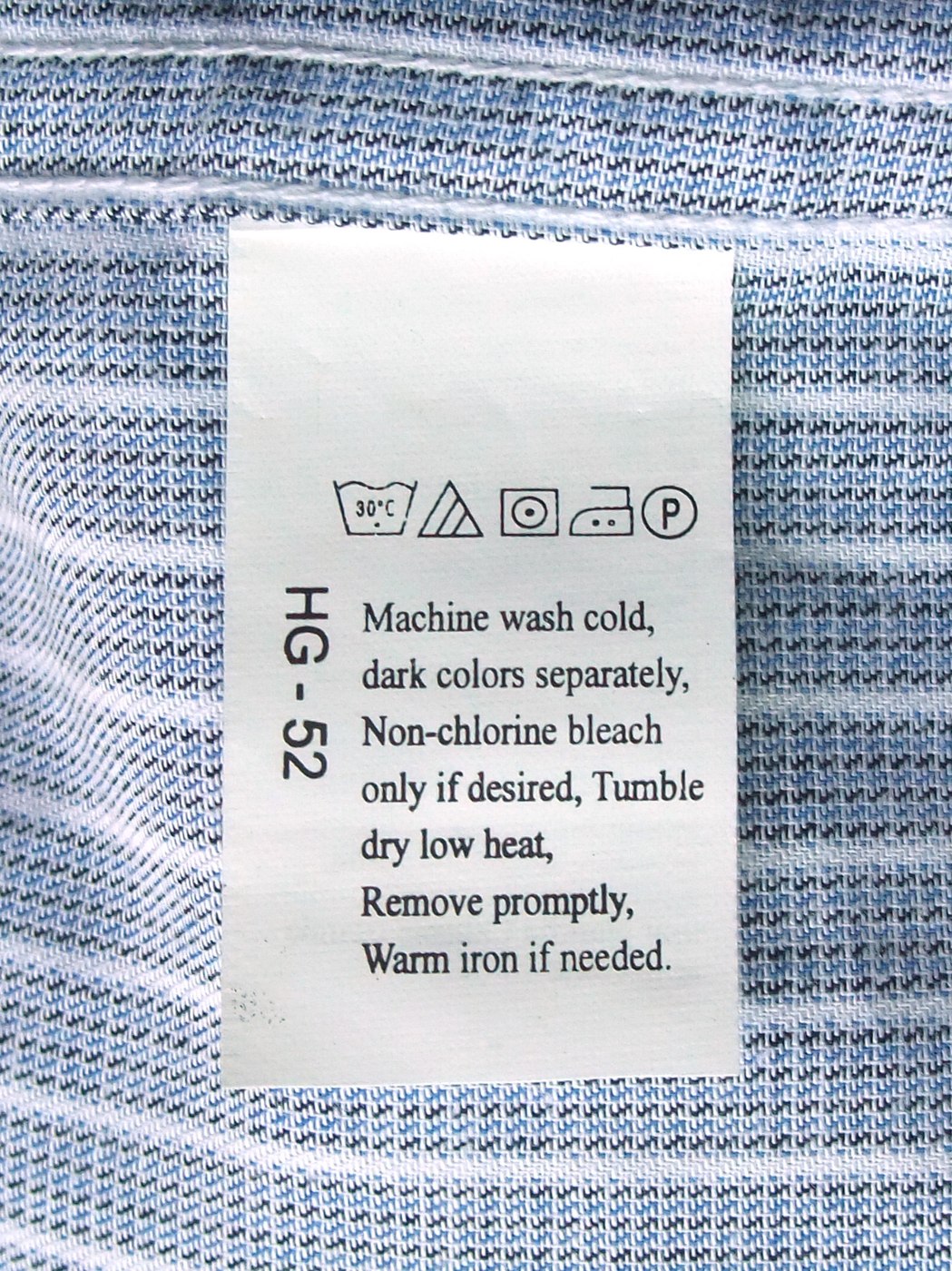
Laundry symbols describe different stages of care. A wash symbol alone does not tell you how the garment should be dried, and a familiar-looking shape can change meaning when a line, dot, or cross is added. Use a reliable symbol chart when you are unsure rather than relying on a guess from memory.
Read the label from beginning to end
Look for written instructions as well as symbols. A garment may have a general washing direction followed by a specific restriction. Read both before sorting it into a load. The FTC provides an ASTM care-symbol guide that can help interpret common symbols used on US labels.
Check that you are reading the care label for the whole garment rather than a tag describing only fiber content or size. Linings, trims, prints, and construction can influence care, so a garment made largely from a familiar fiber may still need different treatment.
Separate the stages in your decision
Think about washing, bleaching, drying, ironing, and professional cleaning as separate questions. A method allowed at one stage does not authorize a different method at another. For example, being washable does not mean that every dryer setting is suitable.
When a symbol is unfamiliar, match it carefully to the chart, including marks underneath or inside it. Do not infer that a more intense cycle will clean better without affecting the garment. Follow the instructions given for that item.
Check the machine’s language too
Appliance settings do not always use the same names as garment instructions. Consult the washer or dryer manual to understand what its controls mean. A button marked with a fabric name may still involve settings you should confirm.
If you share laundry duties, keep the relevant information accessible. A photograph of a hard-to-read label or a note on a separate delicate-items container can prevent an item from joining the wrong load. Avoid removing a label until its instructions have been retained somewhere useful.
Handle uncertainty before the load starts
If the label is missing or illegible, look for the manufacturer’s care information for the exact item. A similar-looking garment may not have the same finish or construction. For a valuable or complicated piece, seek advice from an appropriate garment-care professional.
Do not use a stain-removal experiment as a substitute for checking compatibility. Products may affect color, finish, or trim. Follow both the garment and treatment-product instructions, and keep cleaning products from being mixed.
Use the label when buying as well
Care requirements are part of the cost of owning clothing. If an item needs a process you cannot reasonably maintain, its low purchase price may not make it a useful choice. Compare the garment with your actual laundry facilities and schedule.
A small collection of compatible, regularly worn pieces can be easier to manage than many items requiring separate treatment. That is a household preference rather than a universal rule. The important point is making the care decision with the information available, before the garment is damaged or left unworn.