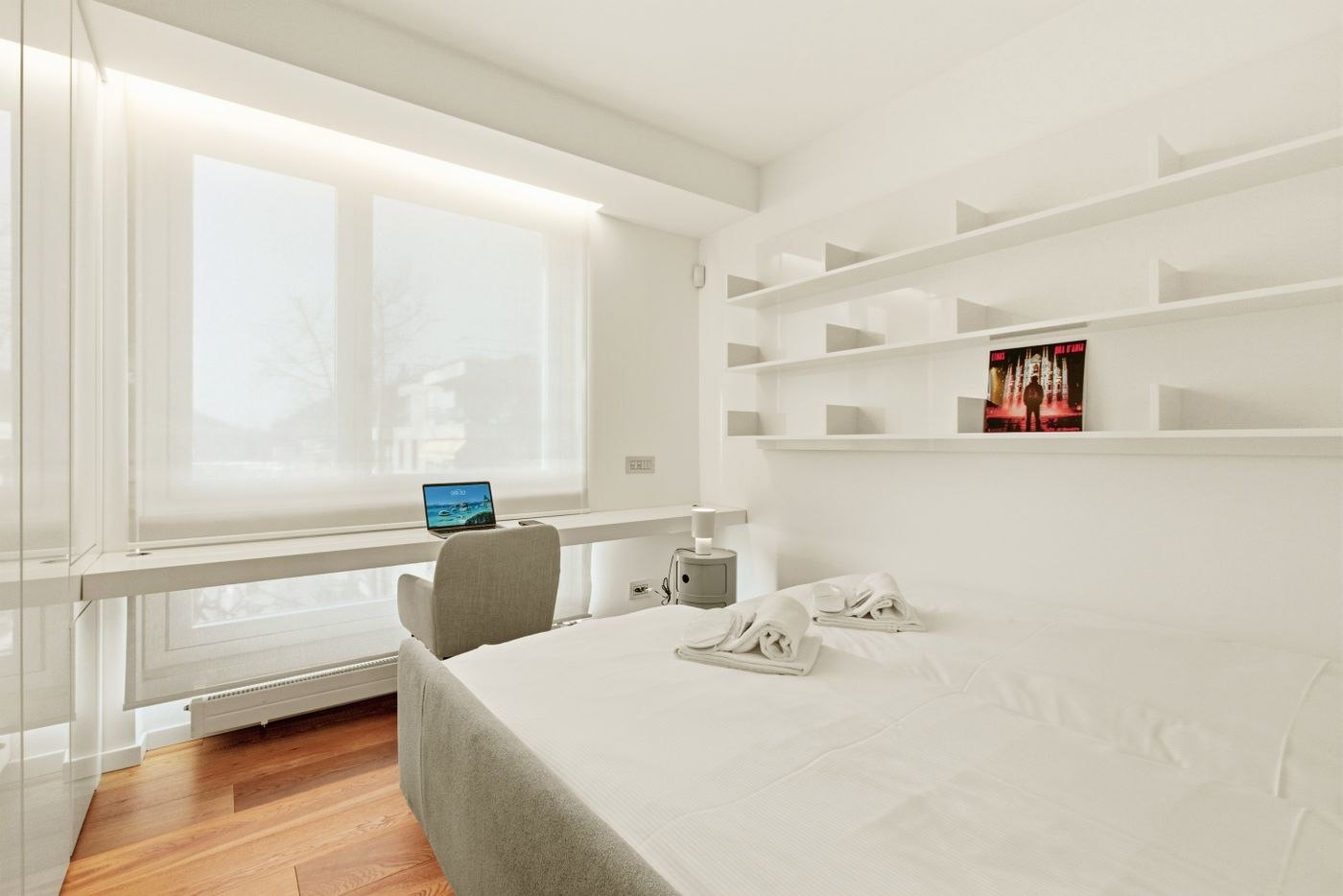
When the only available desk is in the bedroom, separation has to come from the arrangement and routine rather than a spare room. The aim is to make work easier to stop and easier to restart, without packing every cable and notebook away each night.
Identify what keeps the workday visible
An unfinished document on a screen, a stack of forms, or a task list facing the bed can each keep work in view. Choose the items that actually draw your attention. You may only need to close the laptop, turn a notebook over, or move papers into a folder.
A tray or drawer can hold current work together. Give it a specific purpose so it does not become a mixed pile of household paperwork. Keep anything confidential secured according to your work requirements, especially when other people use the room.
End with a restart note
Before stopping, write the next concrete action: reply to one message, check a particular figure, or open a named document. A useful restart note is short enough to understand the next day. It should not become a second full task list that delays finishing.
Save and close work using the systems your role requires. If notifications can be silenced outside working hours, set them appropriately while retaining any genuinely necessary alerts. Do not assume every job allows the same boundary; build around the obligations you actually have.
Arrange the desk for both functions
Keep the chair and equipment out of the route around the bed. Cables should not cross the floor where someone walks at night. A folding desk or movable screen only helps if it can be used safely and does not block ventilation or an exit.
Consider the view from the bed. Turning a screen away may reduce visual distraction without requiring a partition. If a divider is useful, check its stability and the clearance needed to move it. Avoid creating a narrow, awkward route merely to hide the desk.
Separate the roles through activity
After closing work, move to another ordinary activity if space allows: preparing food, taking a walk, or sitting in another room. This can give the day a recognizable transition. It does not need to be a productivity ritual or a guaranteed sleep technique.
Review whether work is repeatedly extending into the intended rest period. The room arrangement cannot solve an unrealistic workload by itself. Discuss expectations where possible, and adjust the task boundary rather than adding increasingly elaborate ways to conceal unfinished work.