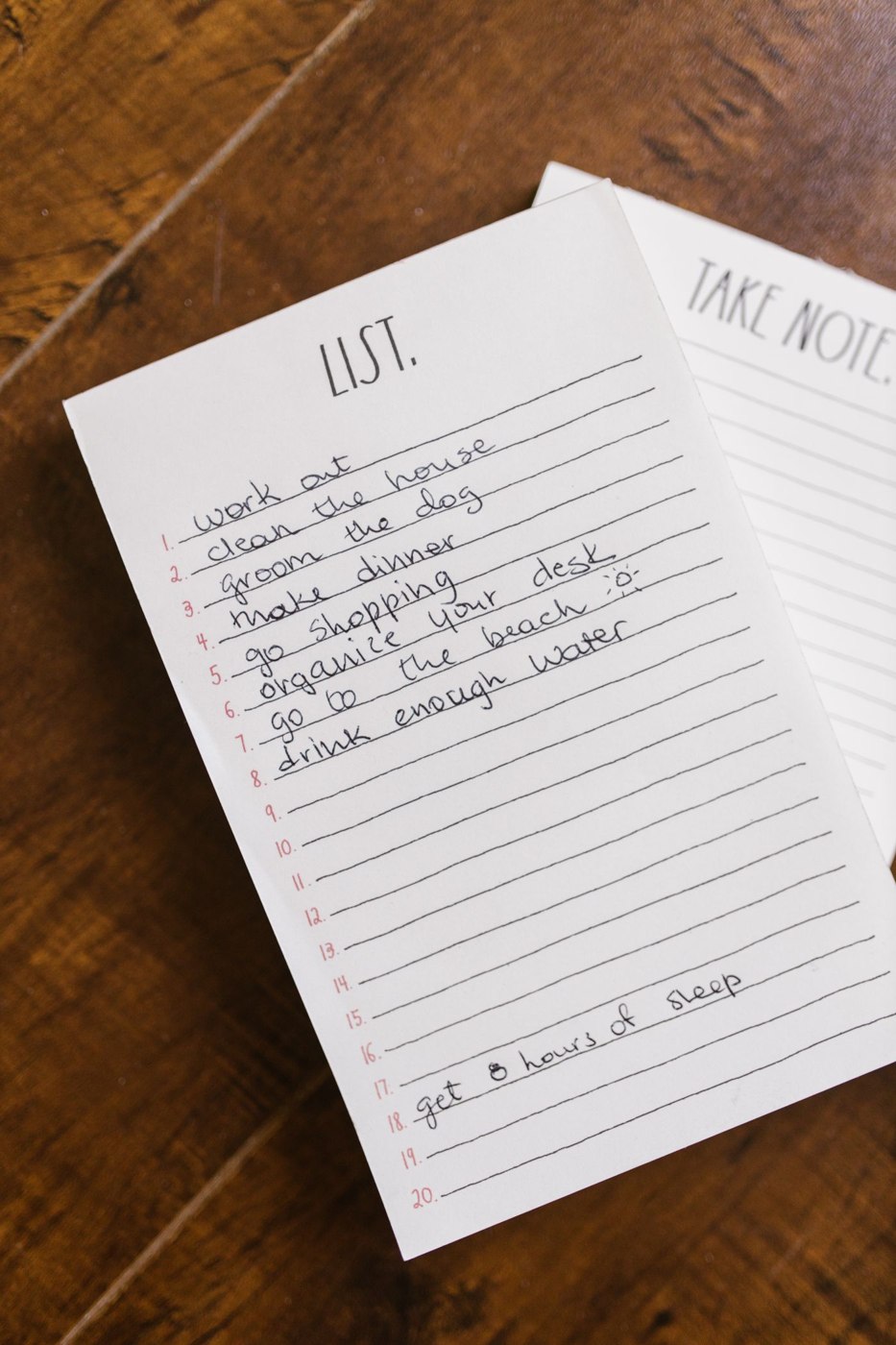
An hour can restore useful order, but it cannot absorb every task postponed during the week. Treat a weekly reset as a bounded appointment with the home. Choose the areas that affect the next few days most directly, and leave deep cleaning, repairs, and large sorting projects on separate lists. The reset should make the week easier to begin without taking over the day.
Choose the result before the tasks
Decide what you want to be possible at the end. Perhaps the kitchen has a clear preparation surface, the laundry needed for Monday is handled, and the calendar is understood. Those results are more useful than a vague instruction to tidy everything. They also make it easier to stop when the hour is over.
Pick a few areas based on current need. A week with visitors may require a bathroom and guest bedding. A normal school week may benefit more from bags, clothing, and meal planning. The routine can have a familiar shape without using exactly the same task list every time.
Divide the time loosely
Allow an opening period to gather items that belong elsewhere, a longer middle period for the selected work, and a final period to put equipment away. Do not start by emptying every cupboard. A task that creates more disorder than can be resolved within the available time belongs in a separate session.
If several people participate, give each person a defined area or result. One can handle the dining table while another checks shared supplies. Avoid having everyone move through the same narrow room at once. Children can join with suitable tasks and supervision, rather than being assigned work beyond their abilities.
Park discoveries without chasing them
A reset often reveals a missing button, an expired document, or a broken drawer handle. Write it down and keep working on the chosen priorities unless it needs immediate attention. Following every discovery turns a one-hour reset into an unpredictable chain of projects.
Finish by putting cleaning products away safely, returning tools, and identifying anything left incomplete. Make the next action clear: a load still needs drying, or a supply must be added to the shopping list. The home does not need to look untouched; it needs to be ready for the activities ahead.
If an hour is consistently too much, shorten the reset and keep only the highest-value results. A manageable routine repeated when needed is more useful than an elaborate weekly event that everyone comes to avoid.