Bathroom cleaning becomes more manageable when the order prevents you from repeatedly moving the same objects or walking across a wet floor. Begin with the room’s use and the products suitable for its surfaces. A sensible sequence supports safe handling as well as a visible finish.
Prepare before applying products
Remove personal items from the surfaces you will clean and place them somewhere dry and safe. Gather suitable cloths, tools, and any protective equipment required by the product labels. Check ventilation instructions and keep the room unavailable to children or pets during the task.
Read each product’s directions before starting. Some tasks require a particular contact time or a rinse. Do not apply several products at once simply to make them work while you do something else, especially if they may contact each other. Never mix cleaning chemicals.
Keep tools and areas distinct
Use separate appropriate tools for the toilet and other bathroom surfaces. Do not carry a cloth from the toilet area to the sink or mirror. Make that distinction understandable to anyone sharing the cleaning work, through clear storage or identifiable tools.
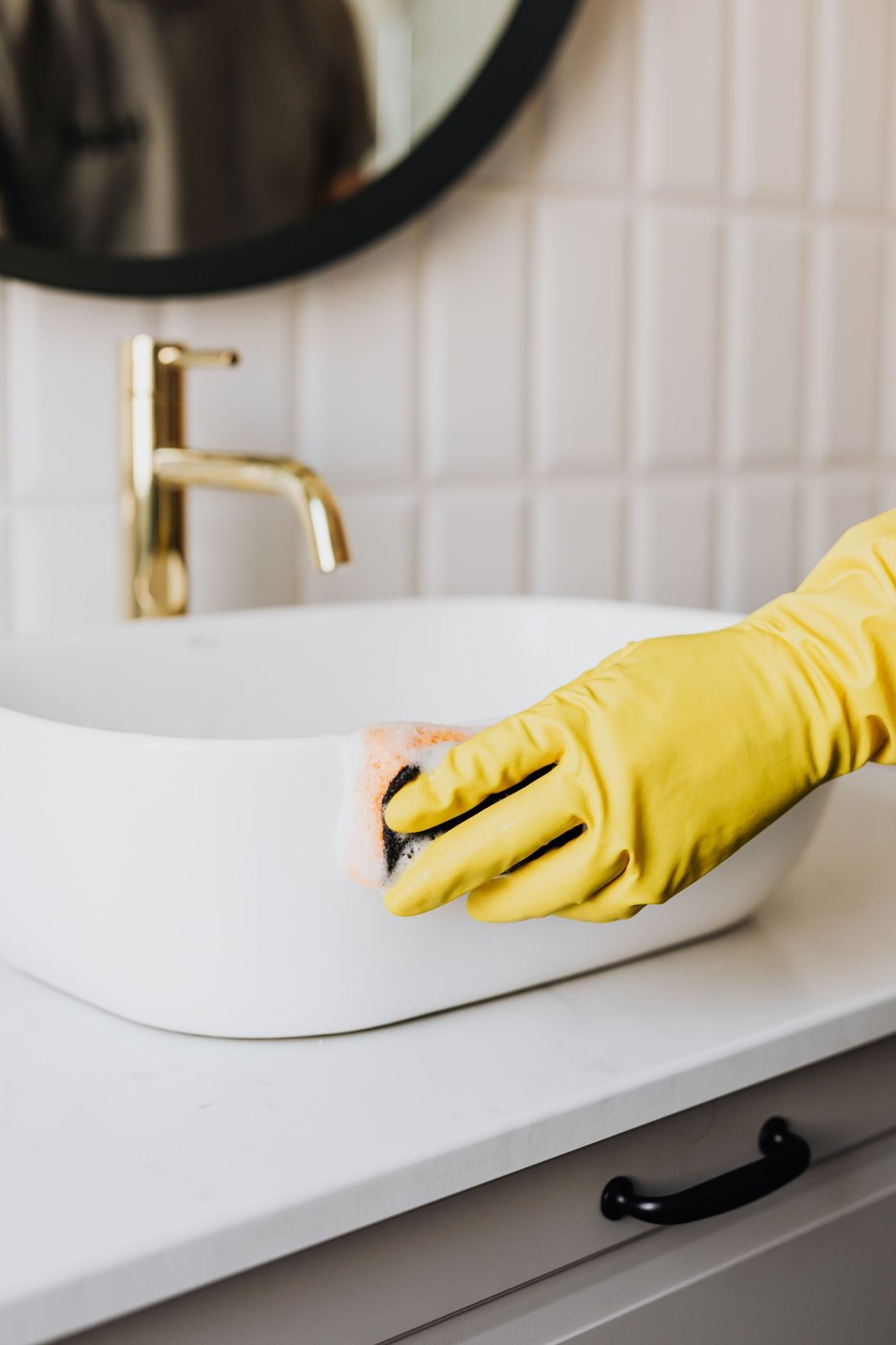
Handle mirrors, basins, shower surfaces, and fittings according to their material-care instructions. Abrasive tools or unsuitable chemicals can damage finishes. A stubborn mark is a reason to identify the deposit and surface, not to combine products or scrub indiscriminately.
Choose a route through the room
Work in a way that leaves the floor until you no longer need to cross it repeatedly. Put cleaned or returned items in place before the final floor task where appropriate. Keep supplies away from the doorway so they do not become a trip hazard.
If a product requires waiting time, use a timer and follow its directions. Do not leave the area accessible with chemicals unattended. When interrupted, secure supplies and make sure others know the room is not yet ready for use.
Dry and restore the room
Complete required rinsing and leave walking surfaces dry. Return toiletries only to suitable surfaces. Hang or place reusable cleaning tools so they can dry according to their care needs, and store chemicals securely in their original containers.
Replace towels when needed and check that the route to the sink, toilet, and shower is clear. The finish includes safe use of the room, not merely the appearance of shiny fittings.
Keep the routine proportionate
A short midweek session may address the basin and visible mess, while another session covers more of the room. Agree on that scope when chores are shared. A person assigned a “quick bathroom clean” should not have to guess whether it includes every tile.
Persistent leaks, condensation, or recurring mold need attention to the moisture source. Cleaning repeatedly without addressing the cause is unlikely to resolve the underlying issue. Seek appropriate maintenance or professional help for problems beyond routine household care.