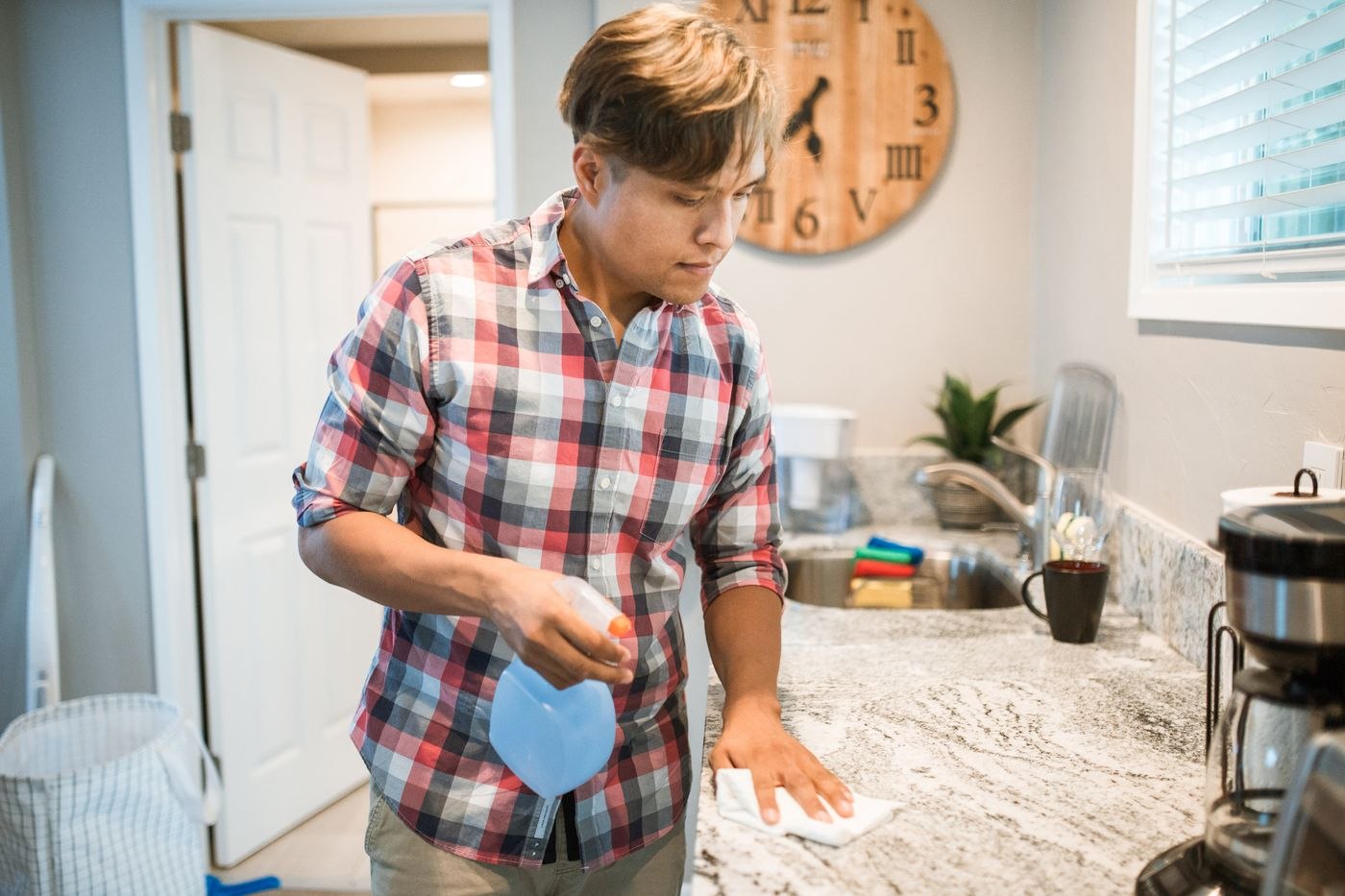
A kitchen counter may need crumbs removed after breakfast, a spill cleaned during cooking, or a more specific food-safety response after raw ingredients have been prepared. Those situations should not all trigger an improvised mixture of products. Start by identifying the surface and what happened on it.
Check the surface instructions
Counter materials and finishes can respond differently to cleaners. Read the manufacturer’s guidance where available, especially for natural stone, wood, or a specialist finish. A product described as suitable for kitchens is not necessarily suitable for every countertop.
Clear food, utensils, and small appliances from the area you are cleaning. Remove loose debris with an appropriate method so you are not spreading crumbs through a wet surface. Keep electrical items away from water and follow their care instructions separately.
Distinguish routine cleaning from a special task
For ordinary dirt or spills, use a suitable cleaning product according to its label. If sanitizing or disinfecting is needed, choose a product intended for that surface and purpose. Cleaning, sanitizing, and disinfecting are not interchangeable labels for the same action.
Food-contact surfaces may have specific directions, including a rinse after treatment. Read those instructions rather than assuming that a general household disinfectant can remain on a counter where food will be placed. Required contact time also matters; wiping a product away immediately may not follow its intended use.
Never combine products
CDC warns against mixing bleach or other disinfectants with other cleaners or disinfectants. Do not add vinegar, ammonia, or another product to “boost” a cleaner. A homemade combination can create dangerous fumes or change how a product behaves.
Use one appropriate product as directed. If it does not appear to solve the problem, stop and reassess the surface and type of residue. Adding a second chemical over the first is not a safe troubleshooting step. Consult the product or surface manufacturer where needed.
Use tools that do not spread the problem
A cloth used on another dirty area should not automatically become the counter cloth. Keep the tools for the task clean and suitable, and handle them afterward according to their care instructions. Replace or wash items as appropriate rather than letting a damp, dirty cloth remain bundled beside the sink.
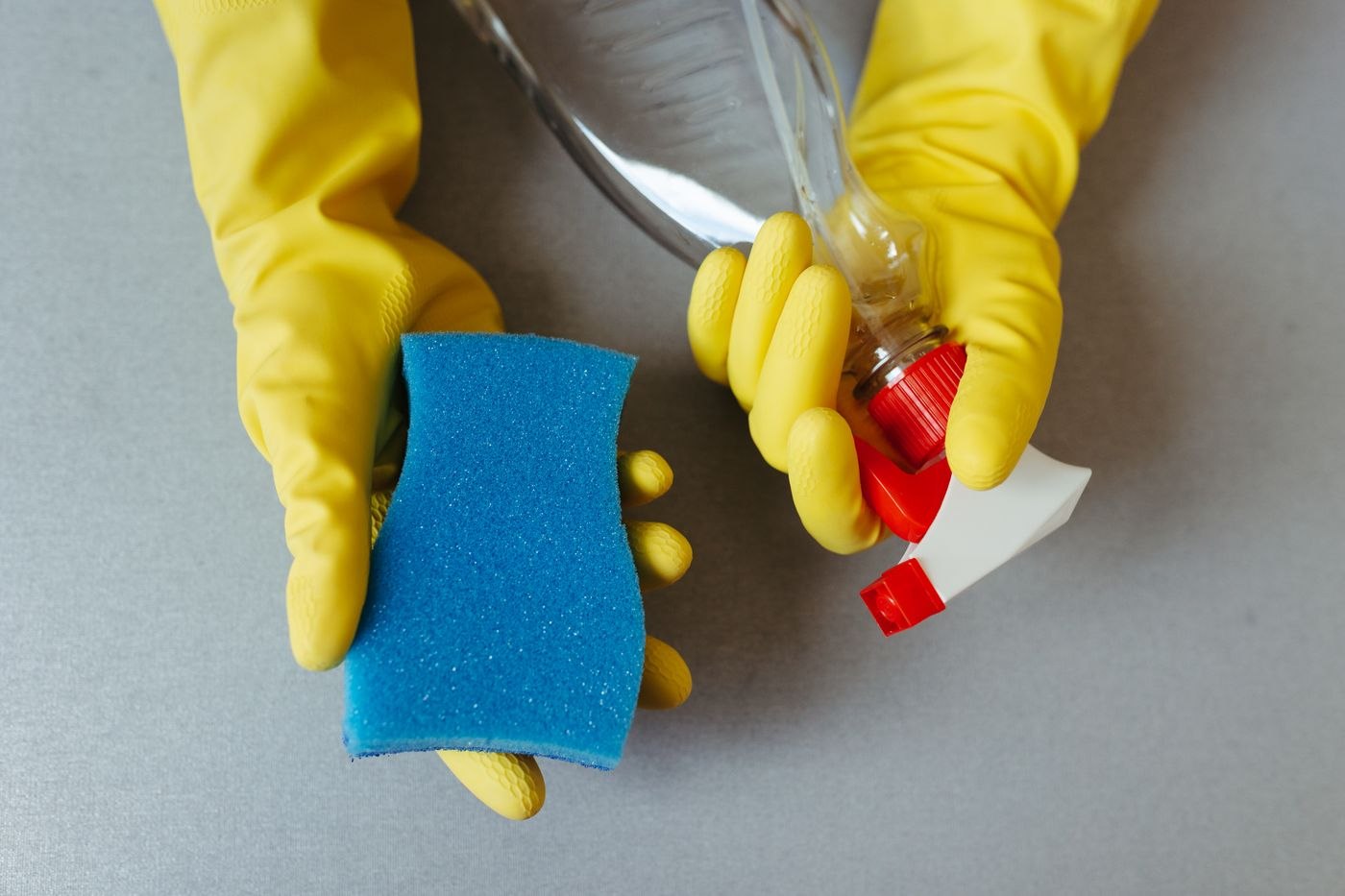
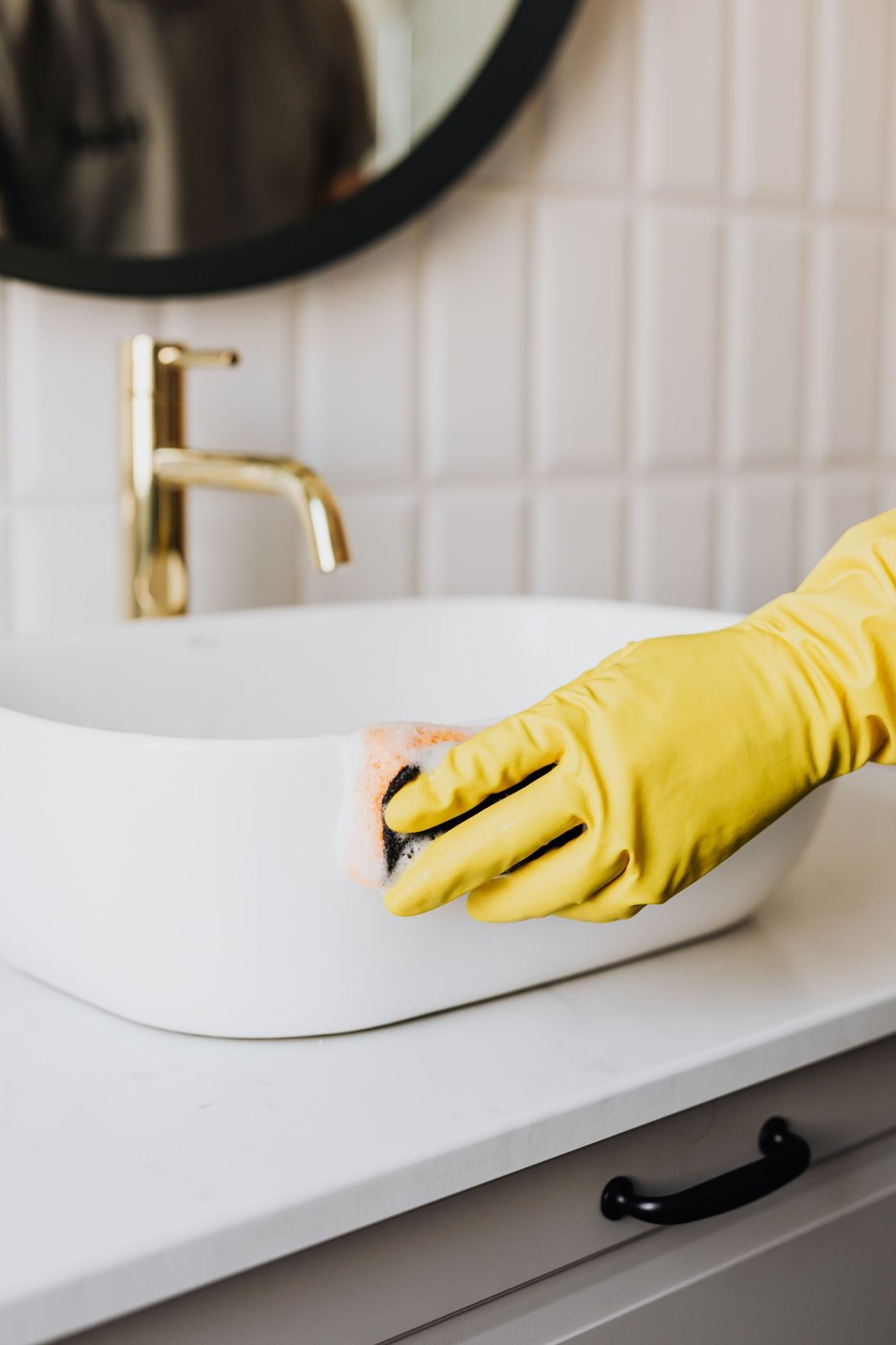
Work on a manageable area and keep children and pets away from the cleaning activity. Follow label instructions for gloves, ventilation, and any other precautions. Do not leave an open bottle on the counter when interrupted.
Finish with a usable surface
Complete any required rinsing or drying before returning food-preparation items. Put products back in secure storage and return appliances only when the area is suitable. A counter that looks clear is not necessarily ready if cleaning instructions remain unfinished.
If the same sticky patch or stain repeatedly resists routine care, investigate its cause and the material’s guidance. Scrubbing harder or escalating chemicals can damage a finish. Keep the routine focused on the actual task and reserve specialist problems for an appropriate method.