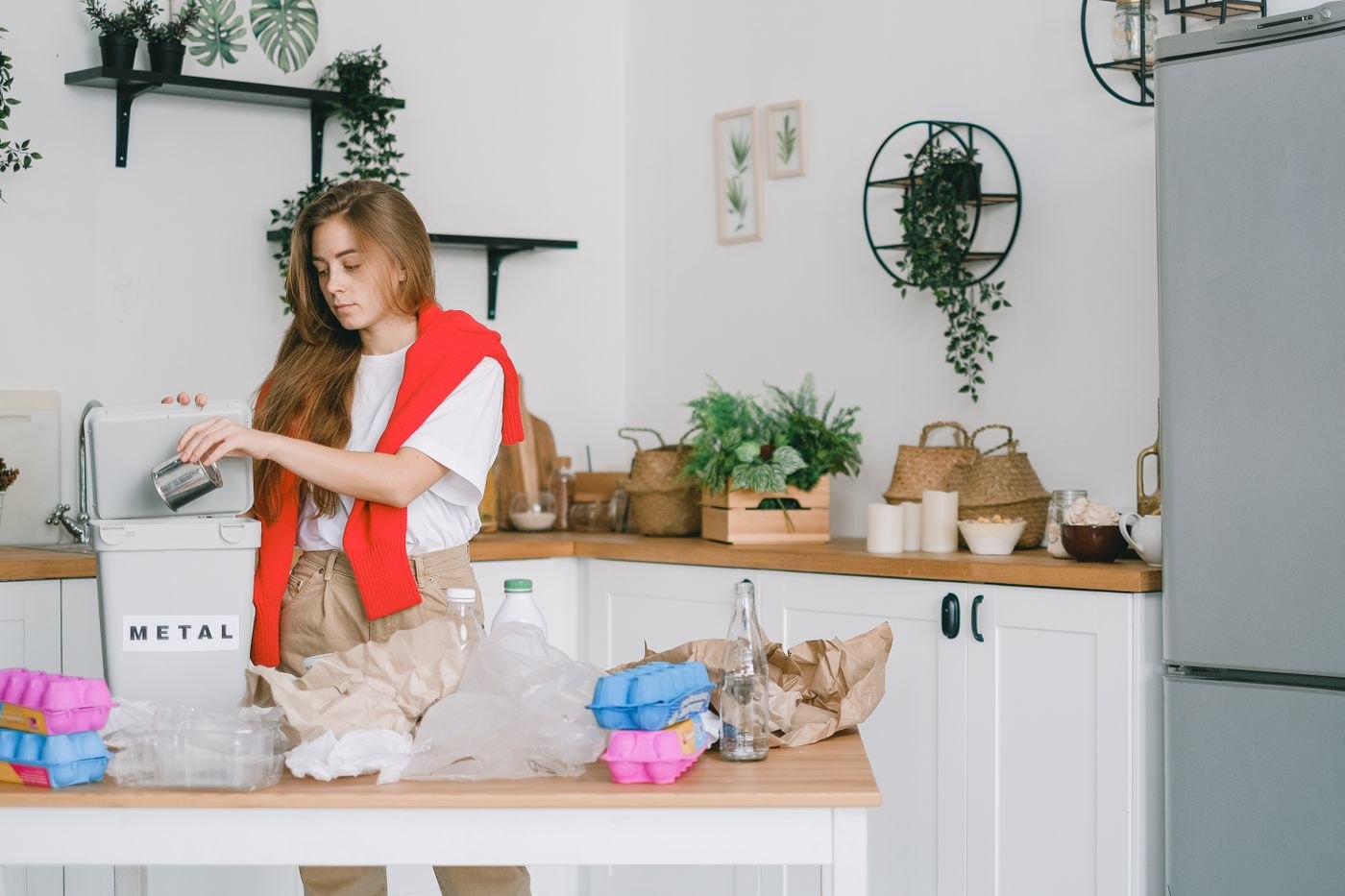
Recycling can spread through a kitchen when containers arrive faster than they leave or when their next destination is unclear. Begin with the materials your actual collection service accepts. A recycling symbol on packaging does not by itself tell you what your local program can process.
Check the local instructions
Use the relevant municipal or service-provider guidance for accepted materials, preparation, and collection. Rules for lids, cartons, films, glass, and other packaging can differ. Avoid relying on a rule remembered from another city or an old address.
Keep a short note of the distinctions that cause confusion in your household. You do not need to display a large general chart if only two materials are regularly uncertain. Update the note when the service changes its guidance.
Choose a collection point with a limit
Place everyday recycling where it is easy to use without occupying food-preparation space or blocking movement. The container should suit the volume between trips to the main collection point. A small kitchen bin can work if its emptying is part of the routine.
Prepare materials as the local program requires. Avoid letting dirty packaging sit indefinitely in the kitchen. Do not add liquids or food simply because the container itself might be recyclable.
Keep special routes separate
Batteries, electronics, chemicals, and other special items may need dedicated collection. EPA warns that lithium-ion batteries should not go into household trash or ordinary recycling bins because of fire risk. Follow appropriate handling and local drop-off instructions.
Store such items safely while arranging their route, not loose among kitchen packaging. Damaged or leaking products may require additional guidance. Do not turn a recycling shelf into an indefinite hazardous-material collection.
Assign the outward trip
Agree who empties the kitchen container and when. If the main bin is outside or shared, consider access and collection day. A pile beside the door usually indicates that the final movement has no clear owner.
Flatten or separate materials only as the service instructs and as safe handling allows. Do not compress sharp or unsuitable objects by hand to make the bin hold more. Keep containers manageable to lift.
Reduce recurring overflow at its source
Notice which packaging fills the space most quickly. Where it suits your needs, a different package size, a refill arrangement, or buying only what will be used may reduce volume. Do not purchase unnecessary goods simply because their packaging is described as recyclable.
If the system still overflows, change the emptying frequency or collection-point capacity within the available space. The useful outcome is material reaching the correct route regularly, not a larger and larger indoor pile waiting for a perfect recycling solution.