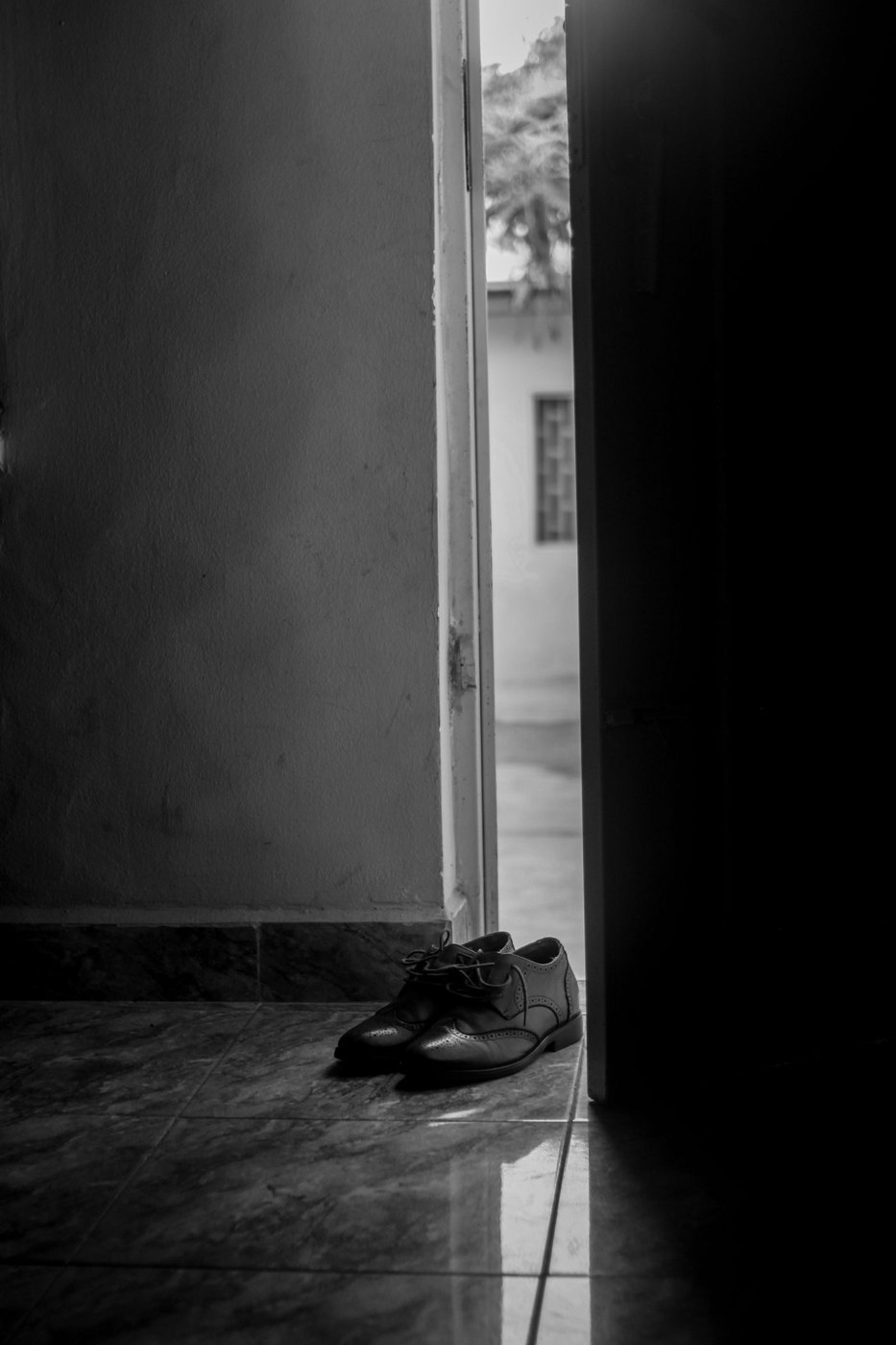
Shoes spread when the entryway is expected to hold every pair owned by every person. Start with what needs to be there today: the shoes used for ordinary departures, the pair drying after bad weather, and perhaps slippers. Everything else needs a deliberate reason to occupy the same limited space.
Measure the route before the rack
Open the front door fully and walk through carrying a bag. Mark the area that must remain clear, including access to any closet or stairs. A shoe rack that fits against the wall may still obstruct the movement the entryway exists to support.
Check whether people can sit safely if they need to remove shoes while seated. A bench can be useful, but its footprint and stability matter. Do not use an unsuitable storage box as seating simply because it is the right height.
Choose a limit that the space can hold
Assign a small everyday allowance per person or a defined shelf, depending on the household. The purpose is not identical ownership; it is preventing the entry from becoming long-term shoe storage. Keep sports, occasion, or seasonal footwear elsewhere when it is not in regular use.
If someone needs several types of footwear every day, account for that openly. A work boot and a school shoe may both belong near the door. Adjust another part of the arrangement rather than expecting an unrealistic one-pair rule to solve the space.
Handle wet shoes separately
Use an appropriate tray or drying location that does not block movement. Follow footwear care instructions and avoid placing shoes against heaters unless specifically permitted. Empty and clean the tray as needed so it does not become a permanent pool of dirt and water.
Do not immediately crowd damp footwear into a closed space. Give it suitable drying conditions before returning it to storage. Keep cleaning products or shoe treatments securely stored, separate from the open entry area.
Make returning shoes the easy action
A rack that requires balancing or stacking shoes precisely may be abandoned when people arrive with full hands. Choose storage that accepts the actual shapes and sizes used. Low shelves can help visibility, but keep access needs and young children’s safety in mind.
Review the entry when the season changes. Remove footwear no longer used and make room for the new everyday set. A quick return of stray pairs to their actual storage is more effective than repeatedly buying another organizer for a collection that exceeds the available footprint.