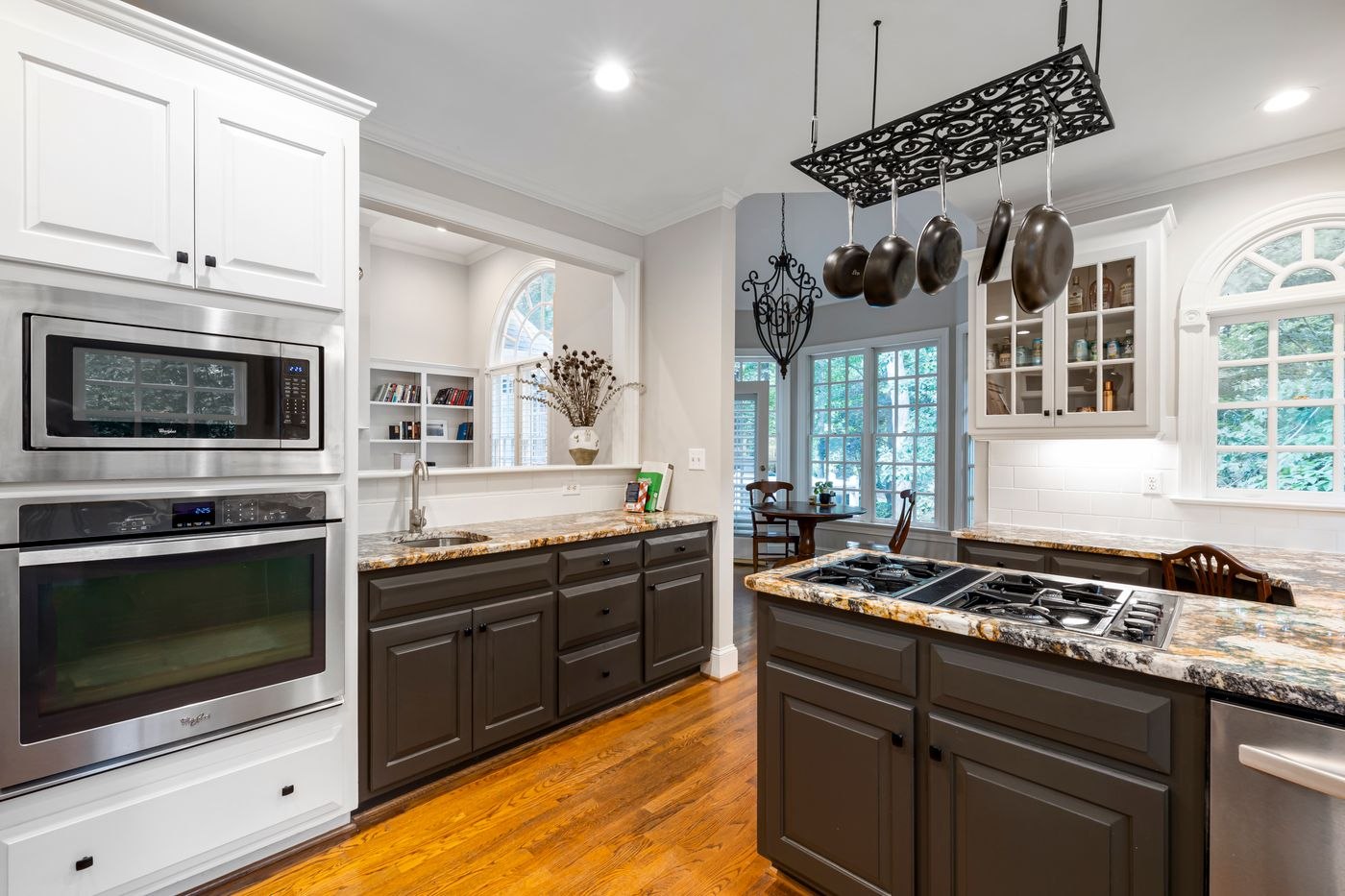
A cookware cupboard becomes frustrating when every pan is part of a balancing act. Reaching a small saucepan should not require unloading the entire shelf. Empty the space once, match the pots with their lids, and separate the items used every week from those used occasionally. The aim is access to the working pieces, not fitting the largest possible stack behind the door.
Find the pans that belong in the front
Choose positions according to frequency and lifting comfort. A heavy pot may be easier to manage on an accessible lower shelf, provided you can reach it without an awkward bend. A high shelf is a poor place for something that must be lifted down while you stand on tiptoe. Consider everyone who uses the cookware.
Before adding an organizer, try reducing the stack. Place two often-used pans separately if space allows. Keep handles from catching the door or blocking adjacent items. If nesting is appropriate for the cookware, follow the manufacturer's guidance on protecting surfaces and avoid arrangements that make a pan difficult to remove safely.
Give lids a deliberate position
Lids can sit beside their pots, stand in a suitable rack or occupy a separate shallow section. Choose the method that makes their sizes visible. A large container holding many loose lids can become another search problem if every handle catches on the next lid.
Check that a proposed rack fits with the cupboard door closed and does not overload the shelf or door. Follow the organizer's installation and weight instructions. Adhesive or over-door products should not be assumed suitable for every cabinet. The hardware needs to support the actual lids and the motion of opening the door.
Keep the awkward pieces together
Roasting pans, steamer inserts and unusually shaped lids often create the pile that defeats an otherwise clear cupboard. Give these items a defined area, perhaps farther back if they are used less often. Store pieces that work together close enough that the full set can be found when needed.
If an item has no matching lid, decide whether it still serves a purpose. Do not keep an unsuitable lid balanced on it just to make the shelf look complete. Equally, a lid that fits several pans may deserve a convenient shared position rather than being permanently paired with one rarely used pot.
Check the system after cooking
The most revealing test is putting clean cookware away. If everything must be arranged in one precise order, the cupboard may be too full or too complicated. Adjust the arrangement until the common items can return without a puzzle. A little unused space can be what makes the whole storage area dependable.