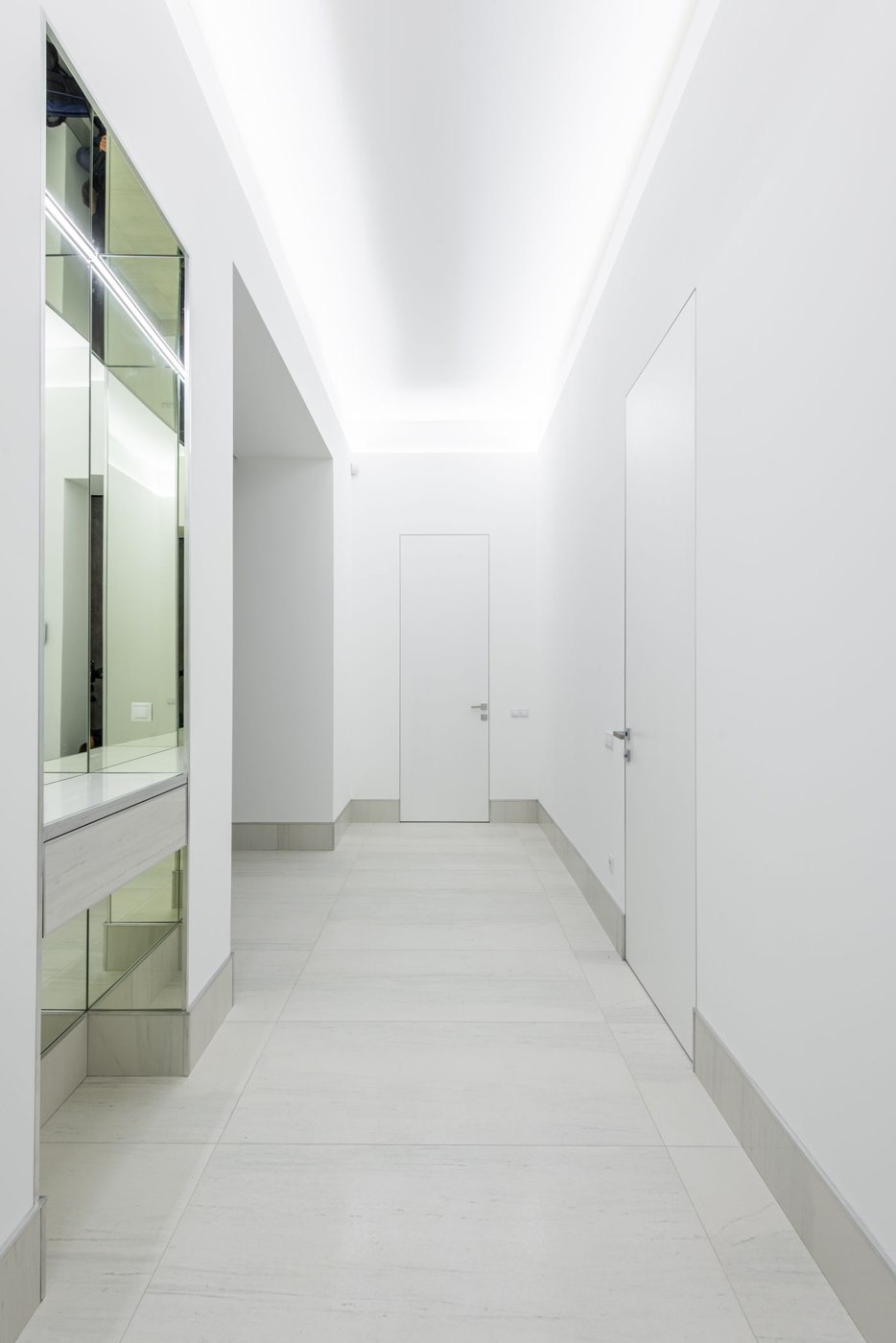
A hallway has to serve people who are asleep and people who are moving through it. The solution is rarely to make it completely dark. Look instead at where light falls, where switches can be reached, and which parts of the route need to remain visible.
Walk the actual route
Check the path from each bedroom to the bathroom or kitchen. Notice door thresholds, changes in floor level, stairs, and objects that are easy to overlook. Remove clutter before choosing a new light. Lighting cannot make a trailing cable or a pile of shoes disappear.
Consider the needs of the people using the route. Someone with reduced vision or mobility may need a different arrangement from another household member. Ask rather than assuming that a very dim light is adequate for everyone.
Control direction before reducing visibility
A fixture aimed toward the floor or the necessary route may send less light through a bedroom doorway than an exposed bright source. Test its position from inside the bedrooms as well as from the hall. Do not cover a lamp or bulb with cloth to block spill.
Motion-activated lights can be useful, but check their behavior before relying on them. Do they activate before the person reaches a step? Do they turn off too quickly? Can they be operated manually when necessary? A feature that works in daylight may behave differently during a quiet nighttime walk.
Keep controls predictable
Guests should be able to find the relevant switch without searching along an unfamiliar wall. Show them the route and controls before bedtime. If a light has several modes, leave it in an agreed setting instead of changing it without telling the people who depend on it.
Keep plug-in devices secure and cords out of the walkway. Avoid blocking an outlet or switch that someone needs for another purpose. Follow the product instructions for location and use.
Review the whole arrangement
The National Institute on Aging emphasizes good lighting and reducing trip hazards as part of home safety. A hallway review should therefore include loose rugs, furniture edges, and the condition of the floor, not only bulb brightness.
When schedules change or a guest arrives, revisit the setup. The right balance allows someone to move safely without needlessly illuminating another person’s bed. If those needs conflict, consider the position of the light and the bedroom door before simply making the route darker.