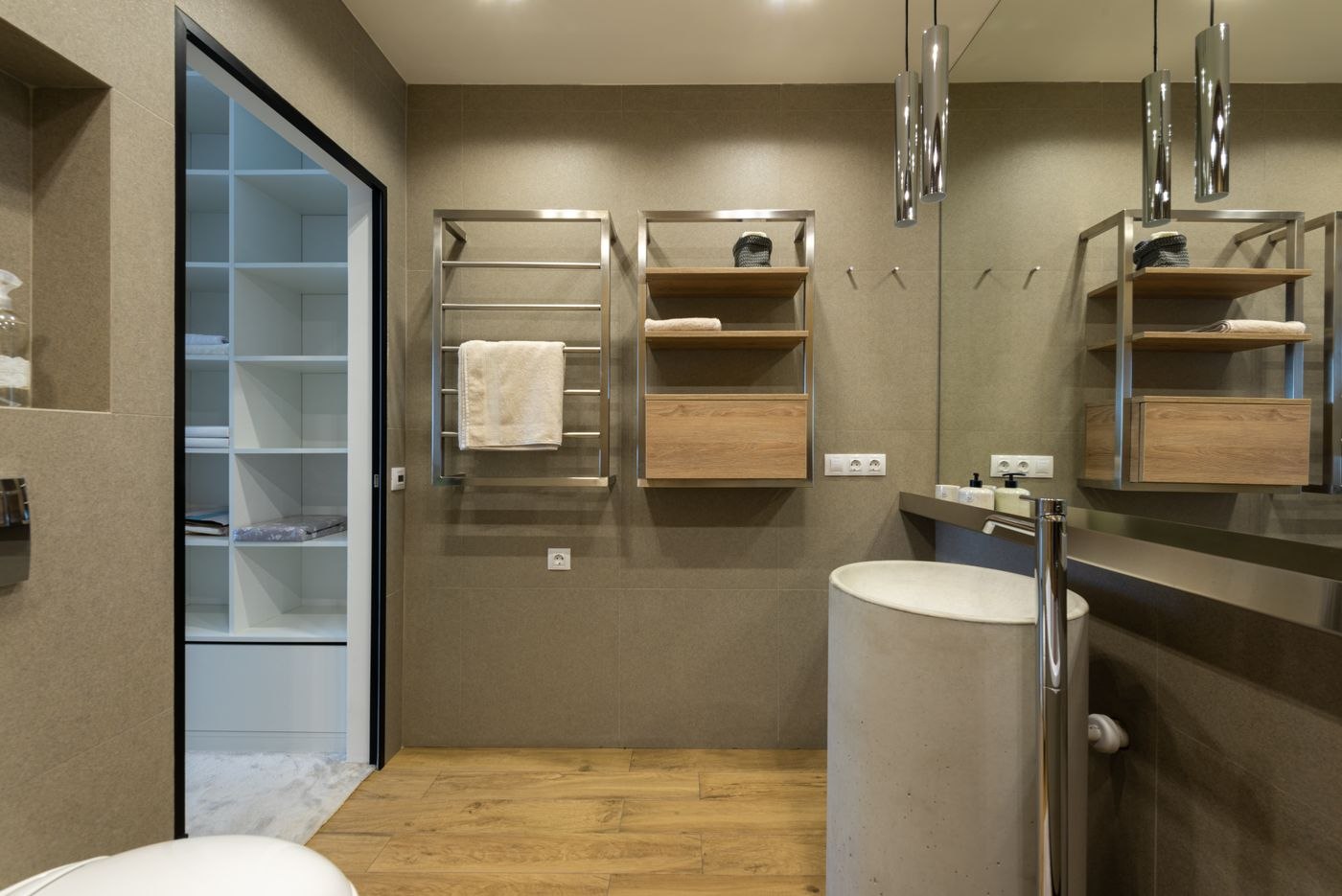
A bathroom cabinet can be full while the sink surround remains crowded. Often the issue is placement: the items used several times a day are behind things needed only occasionally. Start by observing one ordinary morning. Notice what is taken out, where it is set down, and which cupboard doors cannot open comfortably when another person is in the room.
Give daily items the easiest positions
Place everyday toiletries within comfortable reach for the people using them. A shallow tray can group a few items, but leave enough room to wipe the surface and use the faucet. Where several people share a bathroom, separate small containers may be clearer than one crowded communal shelf.
Put replacement supplies farther back or higher only if they can still be accessed safely. Do not create a system that requires balancing on the bathtub or standing on a toilet. A stable, appropriate step stool may help some adults, but frequently needed objects should not depend on an awkward climb.
Separate storage by risk and conditions
Keep medicines, cleaning products, razors, and other hazardous items secured appropriately, especially around children or visitors. Follow their labels for storage conditions. A warm, damp bathroom may not be a suitable place for products that require a cool, dry location; convenience does not override those instructions.
Avoid decanting products into unmarked decorative containers. Original labels preserve identification and directions. Store electrical grooming tools as their instructions require, away from water, and allow hot tools to cool safely before putting them away. A basket is not automatically suitable for a recently used styling tool.
Use the cabinet's actual dimensions
Measure between hinges and around pipes before choosing organizers. A container that fits the cabinet width may still prevent the door from closing. Try a small existing box first to test whether a drawer-style arrangement helps. Open baskets work best when their contents can be identified without lifting several layers.
Review duplicates and nearly empty products before purchasing storage. Set a reasonable place for backups and stop buying when that space is occupied. If a product is no longer wanted, follow its disposal instructions instead of transferring it indefinitely between shelves.
At the end of a week, check whether items return to their positions. If the same toothbrush cup or hairbrush repeatedly stays out, reconsider its assigned location. A usable arrangement accommodates the motions people already make while preserving a clear, cleanable surface.