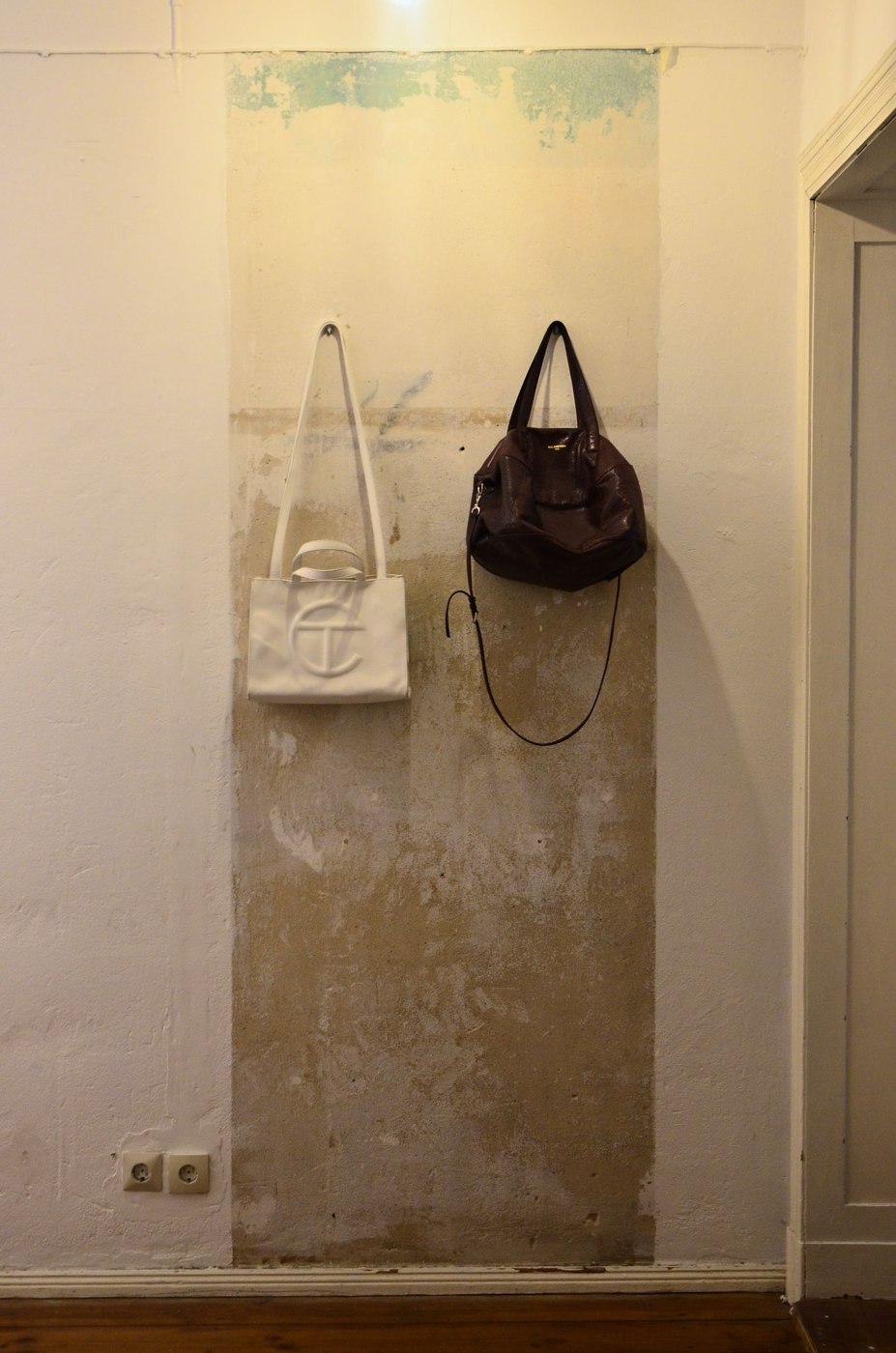
School and work bags often land where a person stops first, whether or not that place is suitable. A useful landing spot follows the arrival routine: somewhere to put the bag down, remove what needs attention, and keep tomorrow’s essentials together. It does not have to hold every bag the household owns.
Choose a place people already pass
Look at the route from the entrance to the kitchen or main room. A storage location far from that route may be ignored even if it has plenty of space. Try a nearby hook, shelf, or stable cubby that does not obstruct the doorway or narrow the passage.
Position storage so each user can reach it without climbing or swinging a heavy bag above another person. Check hook and shelf load limits, fixing requirements, and the weight of a fully packed bag. A decorative adhesive hook may not be intended for the load it is being asked to carry.
Separate the bag from its urgent contents
Make unpacking predictable. Lunch containers go to the kitchen, wet clothing to an appropriate drying place, and papers needing attention to a defined tray. Leaving those items inside until the next morning turns storage into a way of postponing necessary tasks.
Keep a small space for items that must return to the bag, such as a permission slip or borrowed book. Use a clear label if several people have similar belongings. Avoid placing unrelated household paperwork in the same tray, where it can hide an important item.
Store the active bags
Leave room for the bags used this week and put occasional luggage elsewhere. A crowded row of hooks makes it difficult to remove one bag without dropping another. If space is limited, assign each person a position rather than adding more hooks every time a new item appears.
Keep straps and handles from trailing across the floor. Check the area from a child’s height as well as an adult’s. A bag placed under a bench can still obstruct feet if it protrudes into the path.
Reset for the next departure
Once the day’s contents have been dealt with, return essential items to the bag or its assigned spot. This is a short handover between arrival and departure, not a requirement to pack an entire week in advance. A landing area works when everyone can find their things and leave without first clearing someone else’s pile.