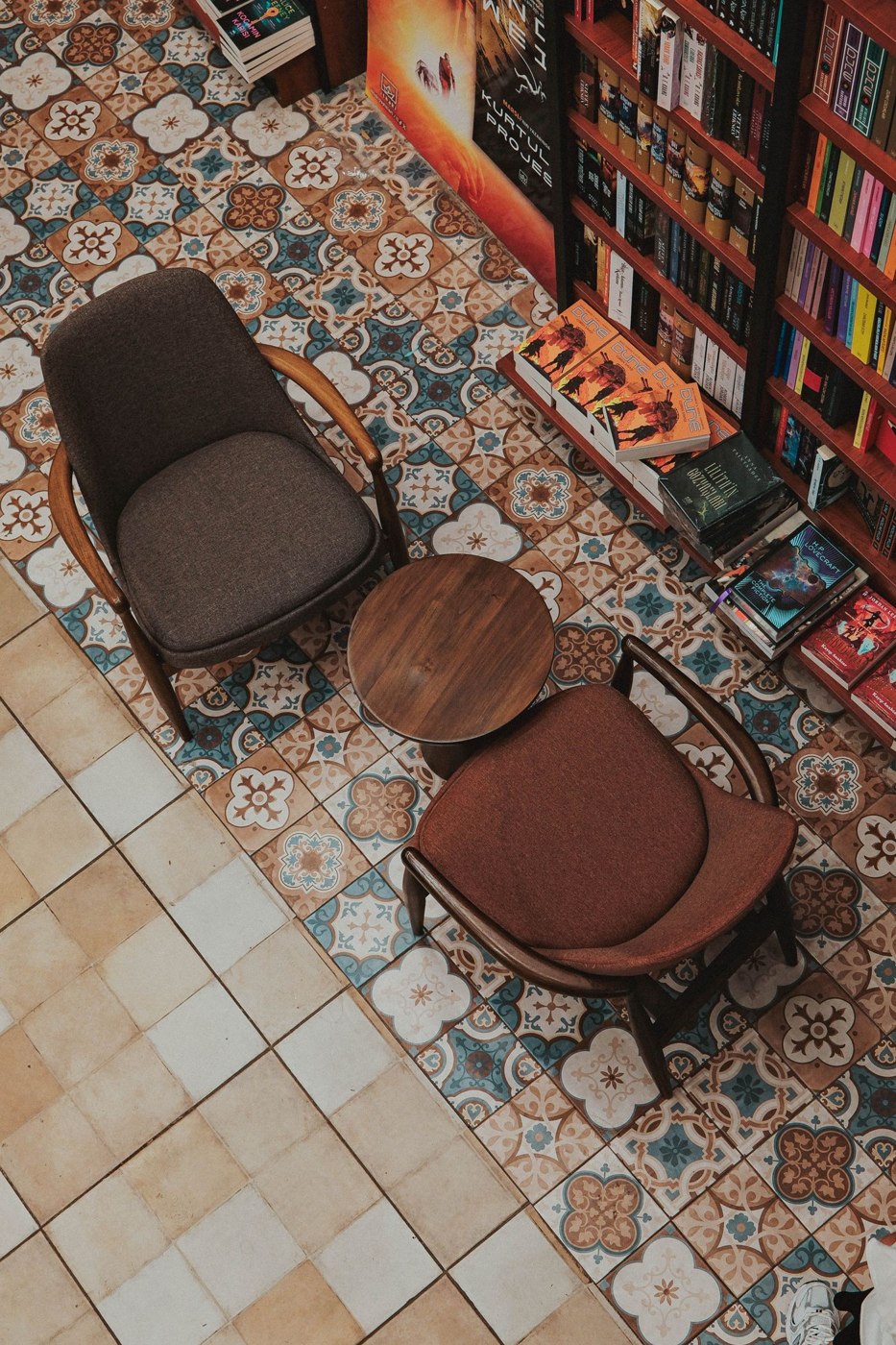
A quiet corner can be part of an ordinary room. It does not need a separate purpose-built space or a collection of relaxation products. Its value comes from being available when you need it and from having fewer interruptions than the activity you have just left.
Choose the location by use
Notice where household movement and sound are greatest at the time you would take a break. A chair by the kitchen may be pleasant in the morning but busy after school. Choose the location for the relevant part of the day, not only for how it looks.
Keep the seat accessible and the route clear. If the corner requires moving a drying rack or unpacking stored boxes each time, it is unlikely to remain useful. Consider whether another existing chair can serve the purpose with a small change in arrangement.
Provide only what the pause needs
A stable place for a drink, suitable light for reading, and somewhere to put a book may be enough. Avoid surrounding the chair with every possible hobby supply. Too many options can make the area another storage zone.
If you use audio, keep the controls simple and the volume comfortable. Consider whether you need to hear someone calling, an alarm, or a delivery. A quiet corner should fit your responsibilities rather than pretending they disappear.
Make the boundary understandable
Tell other household members what the space means when you are using it: perhaps a brief uninterrupted pause unless something urgent happens. Agree on a similar opportunity for others. A shared room cannot become permanently unavailable because one chair has a new purpose.
Choose a realistic period and arrange any necessary caregiving coverage. If you cannot step away safely, adapt the break or ask for help rather than leaving someone who needs supervision.
Keep work from settling there
A pile of bills or a laptop left on the side table can change the corner’s role. Return those items to their normal destination after use. If the chair must also serve work, use a simple end-of-work reset so it is available for another purpose.
After trying the corner, notice whether its location and contents actually help. You may prefer sitting near daylight, facing into the room, or using a more supportive chair. Make one change at a time. The space should serve a pause in the day, not demand continuous styling and maintenance of its own.